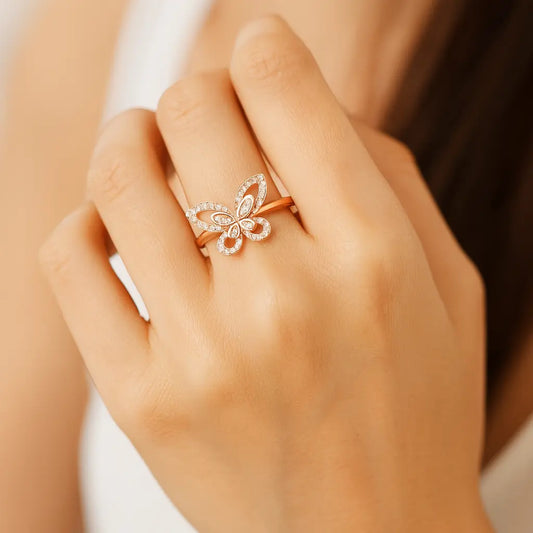
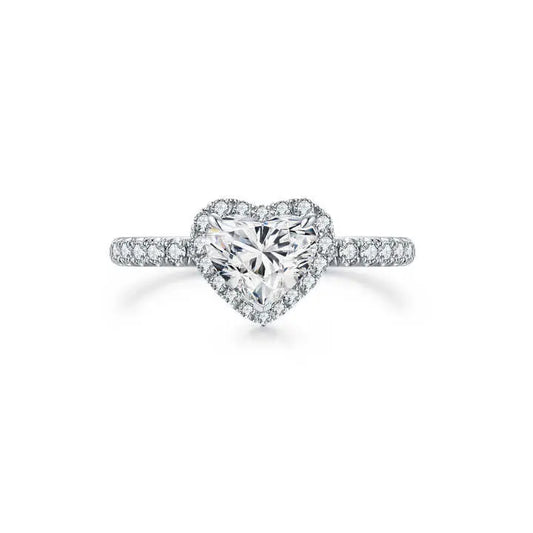
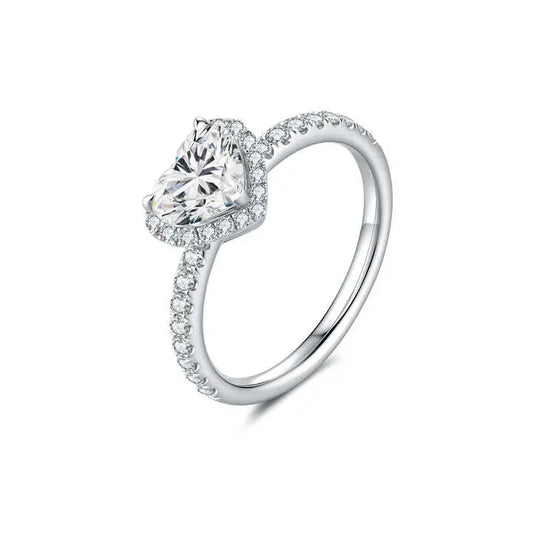
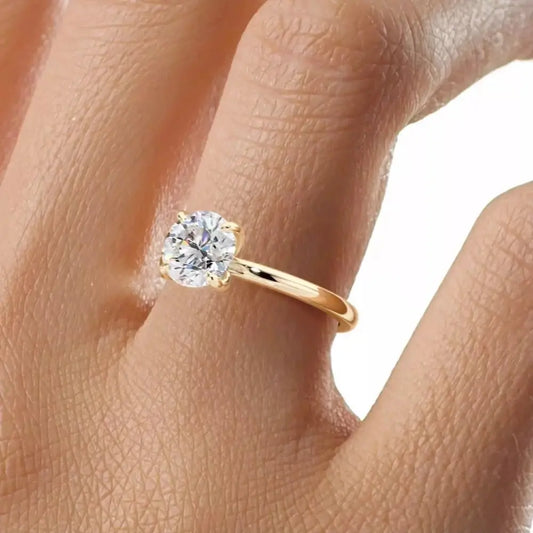
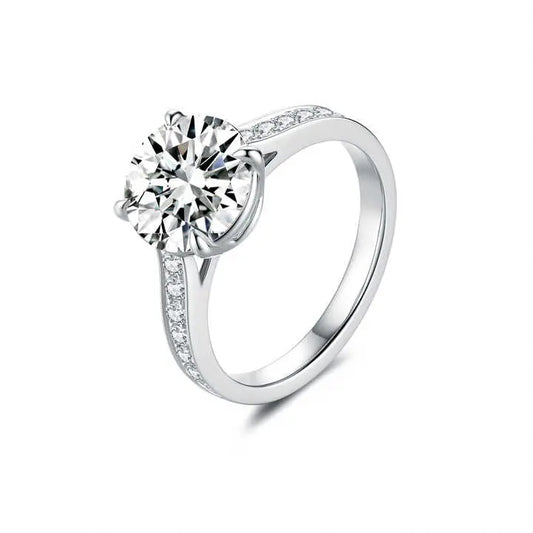
Lab Grown Diamond Engagement Rings — IGI Certified | Future Jewelry
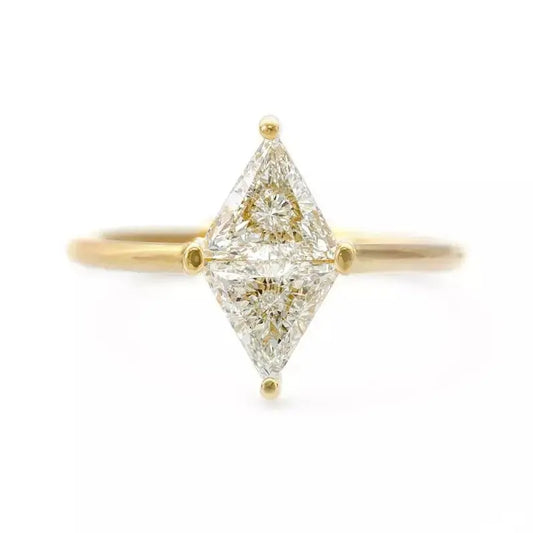
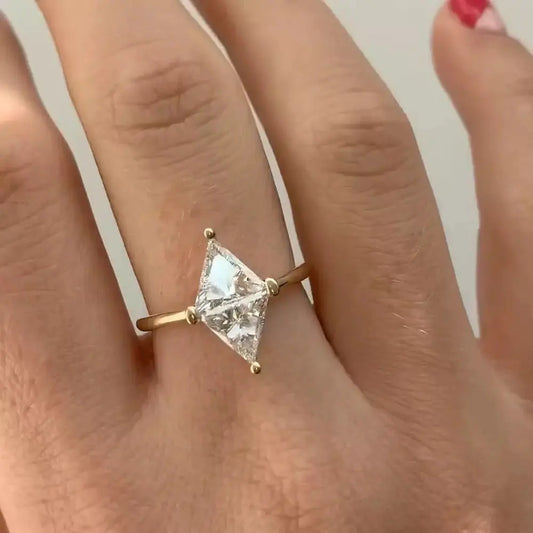
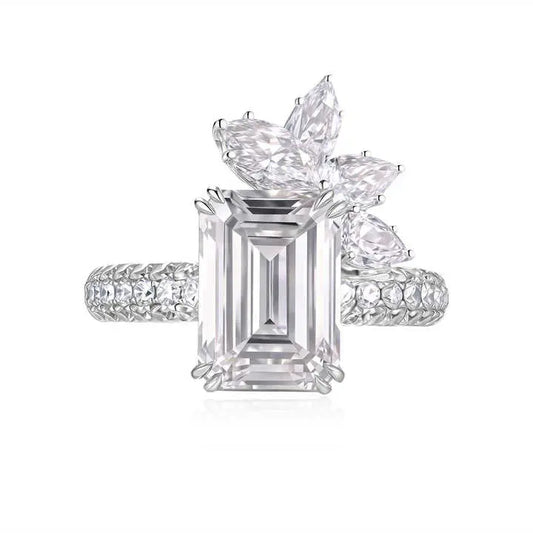
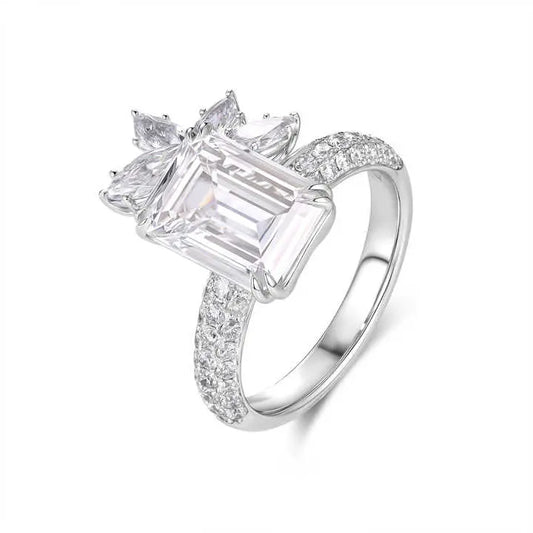
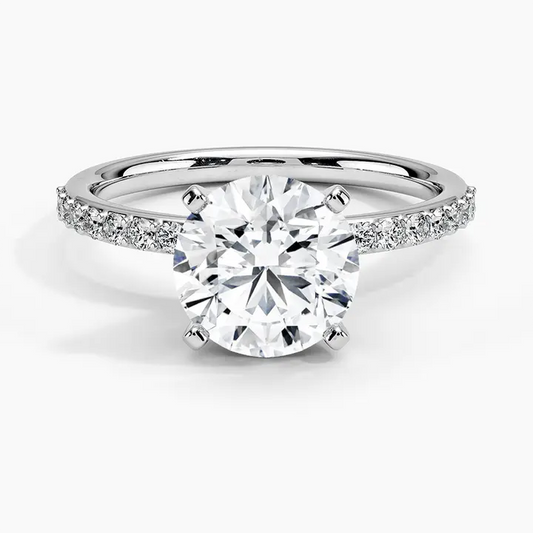
Shop Future Jewelry's full collection of lab grown diamond engagement rings — featuring stunning styles in 14K and 18K yellow gold, white gold, rose gold, and platinum. Whether you're searching for a 3 carat lab grown diamond engagement ring, a 1 carat lab diamond engagement ring, an oval cut engagement ring, an emerald cut engagement ring, or a hidden halo engagement ring — we have it all, IGI certified and ethically made.
Every engagement ring features a certified lab grown diamond that is chemically, physically, and optically identical to a mined diamond — at up to 90% less cost. Real love deserves a real diamond.
Shop By Style:
-
Oval cut lab grown diamond engagement rings — elongating and timeless
-
Emerald cut lab grown diamond engagement rings — sleek and sophisticated
-
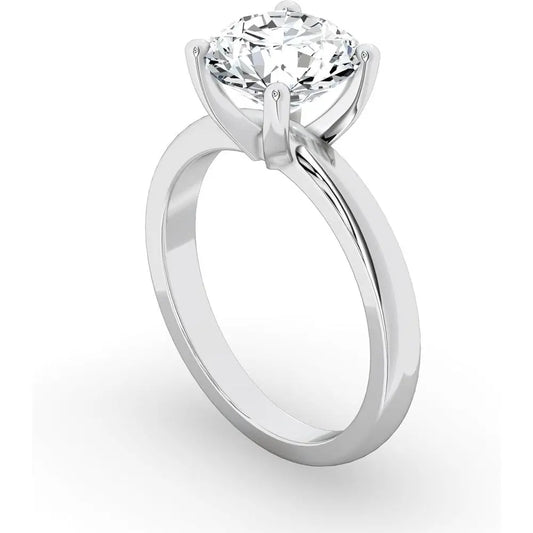
Round cut lab grown diamond engagement rings — classic brilliance
-
Radiant cut lab grown diamond engagement rings — maximum fire and sparkle
-
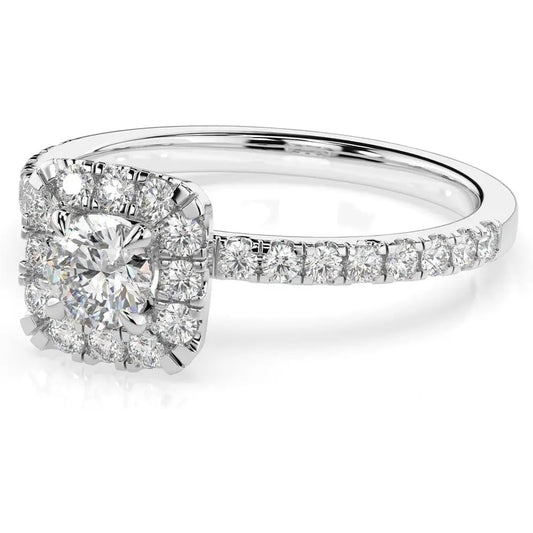
Hidden halo lab grown diamond engagement rings — modern and elegant
-
Three stone lab grown diamond engagement rings — past, present, future
Shop By Carat:
- 1 carat lab grown diamond engagement rings
- 3 carat lab grown diamond engagement rings
- 4 carat lab grown diamond engagement rings
- 5 carat lab grown diamond engagement rings
All rings ship free, include a lifetime warranty, and arrive in a luxury Future Jewelry gift box.
Everything You Need to Know About Lab Diamond Engagement Rings
Are lab diamonds real diamonds?
Yes — completely. Here's the best way to understand it. When you take water and leave it outside in winter, it freezes into ice. When you put water in your freezer, it also freezes into ice. Same process. Same result. Same ice. The difference is the water left outside absorbs environmental gases and impurities, creating slight imperfections. The water in your freezer forms in a clean, controlled environment — purer ice.
That is exactly how lab grown diamonds work. Natural diamonds formed billions of years ago absorbing boron, nitrogen, and other elements from their surroundings — creating imperfections and color variations. Lab grown diamonds are formed in a clean, controlled environment where only pure carbon is present. The result is a diamond that is chemically, physically, and optically identical to a mined diamond — in many cases, actually purer. Both are real diamonds. Both are pure carbon. The only difference is where they were born.
Are lab diamonds worth it?
Absolutely. Lab grown diamonds are IGI and GIA certified using the same grading standards as natural diamonds. They are real diamonds — not moissanite, not cubic zirconia. They score a perfect 10/10 on the Mohs hardness scale. They will not lose their sparkle, will not get cloudy, and will look identical on your 25th anniversary as the day you received them. For the vast majority of couples, lab grown diamonds represent extraordinary value — the same quality diamond at up to 90% less cost.
How much do you actually save with lab diamonds?
Up to 90%. A 3-carat oval cut lab grown diamond engagement ring in 14K yellow gold, F color, VS1 clarity, IGI certified with custom engraving costs approximately $3,500 at Future Jewelry. The natural diamond equivalent costs approximately $35,000. That is a $31,500 difference — enough to fund your entire wedding, honeymoon, first home down payment, or a complete diamond jewelry set. And if you bought a natural diamond ring for $20,000 and tried to resell it in five years, you would likely get $12,000 back — losing $8,000. That $8,000 loss alone could buy a stunning lab diamond ring.
What are the disadvantages of lab grown diamonds?
The honest answer: lab grown diamonds are primarily an emotional purchase rather than a financial investment — but so are natural diamonds, which also lose 30-50% of their value after purchase. The other consideration is social comfort — if your partner or close circle has a strong preference for natural diamonds, that matters. Beyond those two points, there are no meaningful disadvantages. Lab grown diamonds are real diamonds in every measurable way.
Lab grown diamonds vs moissanite — what's the difference?
These are completely different stones. Lab grown diamonds are pure carbon — real diamonds — scoring 10/10 on the Mohs hardness scale, certified by IGI and GIA. Moissanite is silicon carbide — a different gemstone — scoring 9.25, with a double refraction visible under a jeweler's loupe. Cubic zirconia is essentially glass. Lab grown diamonds are in a completely different category from both.
How are lab diamonds made?
Lab grown diamonds are created using two processes — HPHT (High Pressure High Temperature) and CVD (Chemical Vapor Deposition) — that replicate the natural conditions under which diamonds form deep within the earth. The result is pure carbon arranged in the exact same crystal structure as a natural diamond. The process produces a diamond that is chemically and physically identical to one formed over billions of years.
Why are lab diamonds cheaper than natural diamonds?
Lab grown diamonds cost less because they can be produced in weeks rather than forming over billions of years through geological processes requiring extensive mining. The lower cost reflects the production method — not the quality. The diamond itself is identical. Natural diamond prices are also significantly inflated by industry marketing and artificial scarcity control that has existed for decades.
Do lab diamonds lose their sparkle or get cloudy over time?
No. Lab grown diamonds score a perfect 10/10 on the Mohs hardness scale — the hardest material on earth. They will not scratch, cloud, or lose their brilliance under any normal conditions. Unlike cubic zirconia, which clouds within years, a lab grown diamond will look exactly the same decades from now as it does today.
Can you sell lab diamonds?
Yes, though like natural diamonds they depreciate from their retail price. The key advantage is you paid far less upfront — so your actual financial exposure is dramatically lower than with a natural diamond of equal quality.
Are lab diamonds fake?
No. This is the most common misconception — often reinforced by traditional jewelers who make more money selling natural diamonds. Lab grown diamonds are pure carbon, IGI and GIA certified, chemically and physically identical to mined diamonds. They are not fake. They are not cubic zirconia. They are not moissanite. They are real diamonds grown in a laboratory rather than extracted from the earth.